

Does Your Library Have Its Own Annual Book Lists?

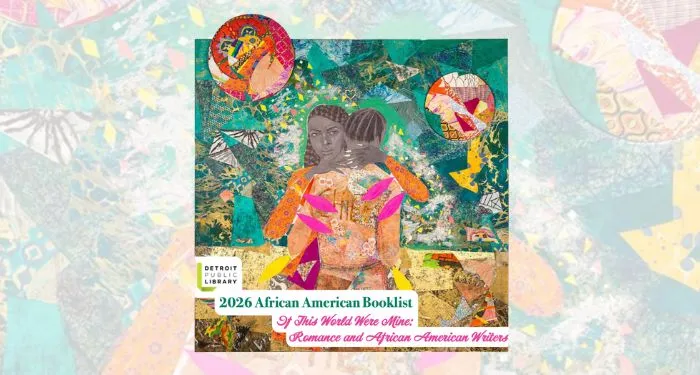
When we think of yearbook lists, we’re often thinking of new York Times Best of the Year, NPR Book Concierge, or, of course, Book Riot’s Best of the Year. Sometimes we can look at what the New York Public Library has done as one of the largest and most prominent library systems in the country. But there are public libraries that are actually working to bring something new and interesting to their communities, and with that, they’re doing the entire world a huge favor!
While we love seeing what’s at the top of lists across the board, libraries highlight communities and types of books very specific to their local communities, which can foster discussion far beyond their local reach.

Detroit Public Library African American Booklist
I learned about this 50+-year-old annual publication from a library colleague when she moved to Arizona from Detroit, and now I keep track of it every year. With such a large Black population and a long and storied history of Black literature and culture, the Detroit Public Library knows how to connect with its community – both its readers and its authors – and how to properly serve a group that doesn’t always find itself represented in the most popular, highly featured books and book lists.
this year’s book list Black opens with some elements highlighting romance, including a profile of the fabulous Beverly Jenkins aka Ms. Bev, a Detroit native and “the Beyonce of romance.” The rest of the publication is a list of books for all ages, with brief descriptions of the plots. Black authors wrote every book listed. It’s a gorgeous, attractive document on my computer, so I know that people who saw it on counters and displays in DPL branches last February were immediately attracted to it.

southwest books of the year
In Tucson, the Pima County Public Library (PCPL) publishes it. southwest books of the year (SWBY) Every January, it highlights books from the previous year that include elements from the southwestern United States and northern Mexico. Less than 100 miles from the Mexican border, PCPL serves a unique and diverse community that speaks hundreds of different languages, including English, Spanish, Yaqui and O’odham. It has a vast history that goes far beyond what we think of as the very white, very imaginary “Wild West.”
In recent years, SWBY’s curators have worked to ensure that their special books explore the duality of life throughout the Southwest, not only in southern Arizona, but also as far east as Texas, to California, to Utah, and into Sonora and surrounding Mexican states. These books range from beautiful photography books to homegrown cookbooks to hyperlocal historical investigations, and – like the Detroit publication – are packaged in a beautifully designed booklet that readers can pick up not only in libraries across the city, but also in bookstores and other places of business.
check your shelf
Sign up to receive Check Your Shelf, the librarian’s one-stop shop for news, book lists, and more.
These are just two examples of what are probably ongoing efforts for libraries to really highlight what they believe in when it comes to their collections and their communities. But let’s talk about what they have in common: These projects were started not as vanity projects but to serve the community. They are prepared by a small group of library staff who have the patience, skill and expertise to produce a balanced list and explain why we should know about them. They’re well-designed, with the end reader’s ease of use in mind, and they’re also offered in multiple formats (the glossy, floppy-printed version is certainly the centerpiece). These guides attract attention both for their subjects and their artistry, and are publications libraries that can be displayed at any time, not just at a specific time of year. Both of these now have massive followings, with people including regional bookstores and other organizations anticipating their releases and acting accordingly. And they are well-loved by their communities, to the extent that they are both cornerstones of their libraries’ accessibility.
This is the shoulder-tap you need: If you’re thinking about putting together a specific publication for your library that really focuses on who your community is and what they might find interesting, now is the time to get the ball rolling, paperwork and all. You won’t regret it. You’ll probably be tired and sore by the time it’s in print, but you won’t regret it. Maybe your publication will inspire another community to try their hand at this – a group of Black Library staff at PCPL used the DPL list as inspiration their own black booklist.
What are you waiting for?