

The Facts About Writing Fiction (and Nonfiction, Too!)

This content contains affiliate links. When you purchase through these links, we may earn an affiliate commission.
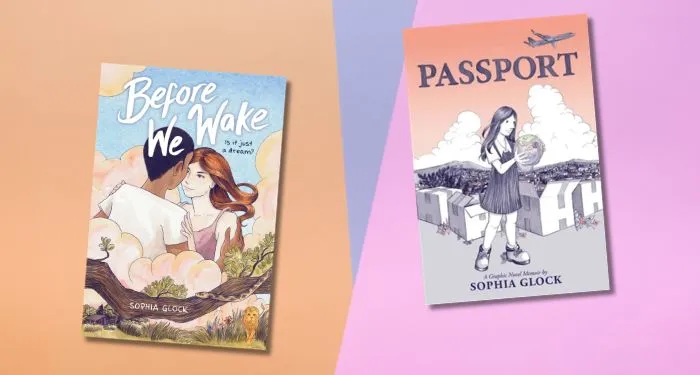
Writing a book is difficult. This applies to any type of book: for children or adults, graphic or prose, fantasy or non-fiction. But that doesn’t mean they are equally difficult. I spoke to Sophia Glock, creator of the graphic memoir Passport and graphic novels first we wake upAbout the unique challenges he faced while working on each of these books.

before we wake up It tells the story of Alicia, a young teenager who is struggling to deal with the death of her father and her best friend’s departure for other interests. Although the story is fictional, there are superficial similarities to Glock’s own adolescence: for example, he and Alicia both grew up in the early 2000s.
“More of [Before We Wake] “I was inspired by real events in my life and dreams. This is a different kind of reality,” Glock told me via email.
She was also able to use her own experiences to inform Alicia’s sense of loneliness:
“When I reflect on my work, I realize that I usually almost always talk about alienation and connectedness. That’s probably because I grew up moving from place to place, but I’ve always felt like an outsider, someone who exists between clearly defined groups and worlds. I also think that struggle between connectedness and alienation is really what adolescence is, a liminal, in-between state.”
heap
Sign up for The Stack to get the best posts from Book Riot Comics handpicked for you.

Glock explored parts of his life story in non-fiction. PassportAbout how she grew up traveling around Central America as she eventually learned that her parents were CIA agents. This book presented very different – and, for Glock, far more difficult – challenges. before we wake up Did.
“It was much more difficult for me to create a cohesive narrative out of the complexities of my real life than to create a new story,” she says. “I wanted to be fair to everyone. Passport, Because when you talk about your life, you’re also talking about the real lives of many other people, and the idea of ’objectivity’ makes writing complicated.
There was also talk of getting CIA approval before publication. As Glock discusses in the book’s author’s note, publicizing some of his memories could jeopardize the safety of active agents. The book was examined by the CIA’s Publications Review Board to ensure that important details were not omitted.
That last hurdle is something most writers won’t have to face, but you have to determine what’s the best outlet for your feelings and ideas. Is it more beneficial to distill one’s experiences and hard-earned insights directly into a memoir, or to transform them into a work of fiction where you can alter the facts to suit your tastes or goals?

Obviously, this is something each writer has to discover for themselves. For Glock – for the moment, at least – the imagination is where his heart lies.
“I’m sure I’ll tell more true stories from my life,” says Glock, “but right now I feel much more drawn to fiction.” […] There is a lot of play and exploration in fiction. It’s much more fun to feel free. You can take a cultural trope or cliché and turn it upside down and look down, turn it on its head, maybe kick it around a bit, see what happens.
After all, this is why the author writes: “There is a strong need to see what happens.” Whether you understand it through fiction or non-fiction is entirely up to you.