

Original Recipe Magical Realism

This content contains affiliate links. When you purchase through these links, we may earn an affiliate commission.
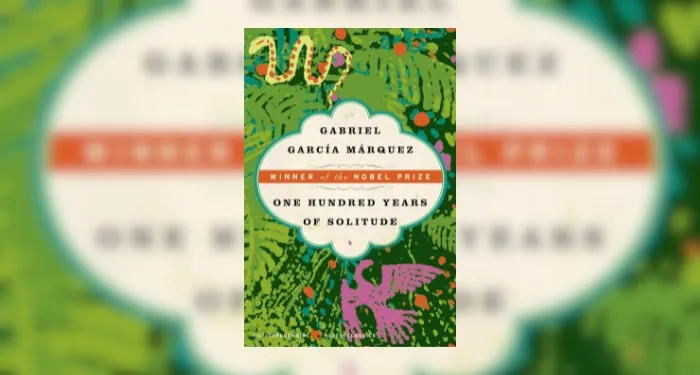
It’s been raining for almost five years, and yes, a woman reached heaven while washing her clothes. It’s Just Another Day in Macondo, Gabriel García Márquez’s fictional setting One Hundred Years of Solitude.
In a recent episode of Book Riot’s latest podcast, zero to well readRebecca and Jeff discover the novel that made magical realism a global phenomenon. They talk about what magical realism is (and isn’t), the rise and fall of the Buendia family, the fictional town of Macondo as an allegory for real-world history and political events, and why the book is so hard to summarize. Plus, they also give tips on how to read One Hundred Years of Solitude Without getting lost and considering why its surrender to chaos is part of the experience.
If you haven’t checked out the podcast yet, it’s kind of an English class/book club hybrid where Book Riot OGs Jeff and Rebecca tell you everything you need to know about the books you want to read. Every week, I put together a companion newsletter for the show, a roundup of fun facts, trivia, quotes from episodes, literary side quests, and more. You can check this one for One Hundred Years of Solitude Below
Subscribe to the Zero to Well-Read Podcast But apple podcasts Or spotifyor join Zero to Well-Read Patreon For early, ad-free listening and bonus content, and to receive the Zero to Well-Read newsletter in your inbox.
Follow Zero to read well Instagram, tiktokAnd youtube.
Latin Lit
A bi-weekly newsletter about all things Latin literature, from news and new releases to recommendations and more!
Email Jeff and Rebecca [email protected]
two truths and a lie
Can you guess which of these is fact and which is fiction? Answers follow at the end.
- Before becoming a journalist and novelist, Gabriel García Márquez was studying to become a doctor.
- Márquez was insulted by Latin American Nobel laureate Mario Vargas Llosa by publicly confronting a female friend during a film screening.
- In 1977, García Márquez became beholden to Fidel Castro, who proofread his manuscripts before they were published.
show quote out of context
In probably my favorite section of this newsletter, I’ve selected standout quotes from the episode. They range from lightly hinged to wildly unhinged. Here it is!
- “So even in the event of a miracle, military and authoritarian logic doesn’t care. It has its own goals, which are to control, dominate, and seek power.” Very real, Jeff and Rebecca. very real.
- “Did Gabriel García Márquez Invent the Horseshoe Theory?”.
- “Did Marquez invent chocolate, the edible THC-laced drink?”.
- “This is an entire graduate thesis: mortuary rights and Gabriel Garcia’s 100 years of solitude“
- “Is this the sexiest book in the modern canon?”.
literary tourism
Colombia in itself is a fascinating place to visit, it is at the top of my personal list. But if you’re looking for a bookish reason to book that flight, you can make pilgrimage to discover the world of 100 years of solitude. At under $4,800 per person it’s not a cheap date, but seems worth the price of admission. You’ll get to experience Bogotá, Santa Marta, Cartagena and other places that shaped and inspired García Márquez through their cafés, libraries, beaches, botanical gardens and more.
extra credit reading
The episode was recorded two months earlier, before United States forces captured Venezuelan President Nicolas Maduro and his wife on January 3. This is a complex issue and the latest example in the long, long history of US intervention (and destabilization) in Latin America, which feels especially relevant given the themes of anti-colonialism and political violence. 100 years of solitude. Here are some sources to learn more.
readlikes and such
You can listen to the Book Riot podcast episode (linked below) on magical realism for a more robust list of magical realism classics, as well as a whole bunch of records for modern texts in the tradition. Here’s a small sample:

like water for chocolate By Laura Esquivel
As the youngest daughter in her family, Tita de la Garza’s purpose in life is to take care of her tyrannical matriarch, Mama Elena. She falls in love with a boy who also loves her, but Mama Elena forbids their union. What solution does she offer? He can marry Tita’s sister instead. There is certainly no flaw in this plan! Oh, minor detail: Whatever Tita feels – from intense sadness to intense excitement – she finds her way into the food she eats.
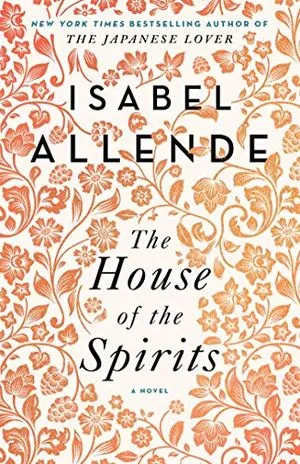
house of spirits by Isabel Allende
It was the great Isabel Allende’s first novel, set in an unnamed South American country that resembles 20th-century Chile. It follows four generations of the Trueba family as they navigate tragedy, turmoil, and uncertainty amidst political turmoil. Centered on visionary Clara and her possessive husband Esteban, it also features characters who strongly resemble military dictator Augusto Pinochet and poet Pablo Neruda.

love in the Time of Cholera By Gabriel García Márquez
If you like García Márquez, read more about García Márquez! This is another GGM classic, the story of a man who waits for decades to reunite with his first love after she is married to someone else, a prominent doctor fighting to stop cholera. Delayed gratification in the (very) long game of love is a theme in a lot of Latin American literature, which can seem like a real bummer! But it’s a tribute to the transformative power of enduring love.
Other supplementary reading
- PBS Crash Course on Latin American Literature -Host Carly Velasquez breaks down the history of Latin American literature into bite-sized pieces in this super accessible video series, including the birth of the Magical Realism movement and the influence of Gabriel García Márquez.
- here’s our situation Book the Riot Podcast episode on Magical RealismHosted by yours truly, where I refer to GGM as the father of magical realism and immediately apologize for it.
- BBC investigation How 100 Years of Solitude Redefined Latin America: “[H]It was taken from a variety of sources to create an alternative, exaggerated birth of Latin American culture. And in doing so he reinterpreted its nature.”
- GGM’s nobel prize lecture 1982 is off to a bang from start to finish. I encourage you to read and/or listen to the whole thing, but here’s a sample of the kind of time it was: “Latin America neither wants to be a pawn without its own will, nor does it have any reason to; Nor is it merely wishful thinking that its pursuit of independence and originality should become a Western aspiration. …But many European leaders and thinkers have thought so, with the childishness of old men who have forgotten the fruitful excesses of their youth, as if it were impossible to find any other destiny than to live at the mercy of the world’s two great masters. My friends, this is the measure of our loneliness” Tell them, Gabo!
Variations
100 years of solitude It took a long time to adapt, for at least a few reasons. For one, it has been famously impossible to optimize based on content and structure. More importantly, GGM did not want it to be adapted, and especially not into any language other than Spanish. Pero… Those wishes were not respected after his passing: Once you die, someone should get this bread, I guess. Ten years after García Márquez’s death, Netflix released a two-part series starring Marco González, Susana Morales, Claudio Caetano, Vina Machado and others (this book features so multiple characters). We got the eight-episode first part in 2024, and the second part is dropping this year.
I admitted that I had not seen it; It looks like a real stunner, but the content is quite heavy and the reviews are mixed. But in the name of supporting diverse stories and encouraging the people who greenlight these projects to put their money behind them, I’ll indulge and hope that the ghost of Tio Gabby doesn’t snatch the remote out of my hand when I do.
Read more about why it took decades to bring this book adaptation to the screen This excerpt from Vanity Fair.
Did you know?
García Márquez praises Mexican novelist Juan Rulfo’s work for a new translation pedro paramo In which he described his time spent in Mexico City. He found himself at a crossroads in his career when a friend put the book into his hands, and apparently could not sleep until he had read it twice. Not since Kafka had he been so impressed by the work of any literary genius.
Speaking of inspiration, I like what GGM said Her Abuela, Tranquilina Iguarán QuotesWhose storytelling style led him to a storied career blurring the line between fact and fiction. She gave her allusions in an apparently impressively unemotional tone, so much so that our dear Gabo often could not tell when she was spinning a yarn or telling the truth. I’m always here for abuela stories, and this is a good one.
*Answer: Before becoming a journalist and novelist, Gabriel García Márquez was studying to become a lawyer, not a doctor. Her parents wanted her to be like that, but she chose books instead (#relatablecontent)